
Define feasibility
Clarify material category, intended format and the evidence needed to proceed.
Scope feasibility, equipment interfaces, pilot review and technology transfer for non-hazardous topical cosmetic materials and model systems.
Scope the project in reviewable stages. Decide what you need to observe, how evidence will be linked and what needs to be handed over.
Define the material, format and decision that a first study supports.
Review the equipment and the physical container interface.
Connect the batch timeline, sampling evidence and deviations.
Keep records, unresolved questions and ownership together.
Clarify material category, intended format and the evidence needed to proceed.
Understand what the chamber, shelves and condenser do in the system.
Relate observations and method results to identified samples and positions.
Preserve the process rationale, open decisions and document ownership.
Peptide Freeze Drying is a business website of Guangzhou Celsentra Biotechnology Co., Ltd.
No. 76 Fucong Road, Conghua District, Guangzhou, Guangdong, ChinaWorkshop area and equipment count are company-reported figures. Confirm the equipment and schedule for your specific project.
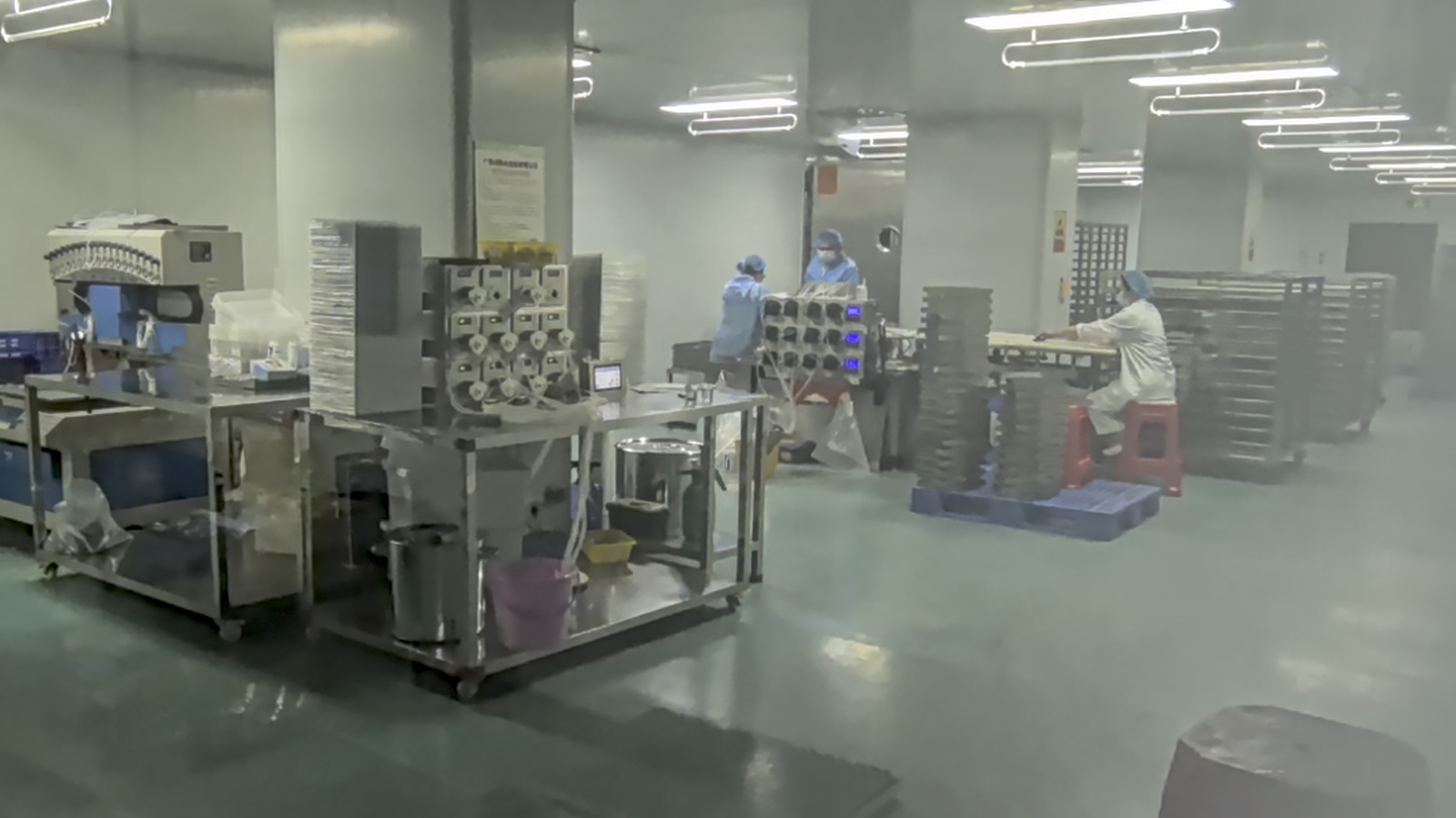
Original workshop footage showing floor layout, equipment and work areas.
Company and workshopSearch the Celsentra COA library by product or lot. Compare the report identifier with the physical pack and the material you requested.
The terms describe the same broad process. A particular project still requires a defined material and process scope.
A prior cycle may be a reference, but its applicability requires evaluation for the new material and context.
No. Confirm the actual equipment, proposed load and relevant capability records for the project.
Appearance is one attribute. Approval should follow the agreed analytical and physical requirements.
Review the relevant differences and establish what evidence is needed in the receiving context.
The target should be justified for the material and intended attributes, with an appropriate method.
No. Educational process information is separate from a documented facility and service qualification.
Composition, quantity, container, known restrictions, intended output and the decision the first stage should support.
No. The condenser captures water vapor on a cold surface; the vacuum system supports the low-pressure environment. Both must be considered with the actual vapor load.
No. Product response depends on heat and mass transfer, container geometry and process stage. A shelf set point does not describe every unit’s thermal history.
Handling and packaging history can affect the sample. Preserve the path between drying and measurement when interpreting the result.
No. Thermal characterization informs development, but the actual formulation, container and process still require appropriate evaluation.
Include your non-hazardous cosmetic material category, container or format, the current stage and what the next review needs to establish.